PACKO PUMPS IN A NUTSHELL
Moving a product through a production line is only part of the job. Protecting its consistency, maintaining hygiene and preparing the equipment for the next batch matter too.
Packo’s hygienic pumping range gives manufacturers options for transferring delicate, viscous and particle-containing liquids. At All-Pumps we offer rotary lobe and twin screw technologies, with selection built around the product and process.
Here’s what matters for your operation:
- Protect the product. Consider how pumping could affect texture, consistency and suspended ingredients.
- Plan for cleaning. The pump needs to suit both production conditions and the cleaning cycle.
- Look beyond flow rate. Viscosity, temperature, pressure and suction conditions all influence selection.
- Make maintenance practical. Access to seals and service components deserves attention before installation.
- Consider the whole working life. Selection, commissioning, maintenance and eventual replacement should form one connected plan.
Whether you are introducing a new product or reviewing an existing installation, start with what the process needs to achieve.
When the product needs careful handling
A pump can achieve the required flow and still create problems elsewhere in production.
An ingredient may need gentle handling to preserve its characteristics. A thicker product may behave differently as its temperature changes. A cleaning cycle may place different demands on the equipment from the production run.
These are the details that make hygienic pump selection an engineering decision.
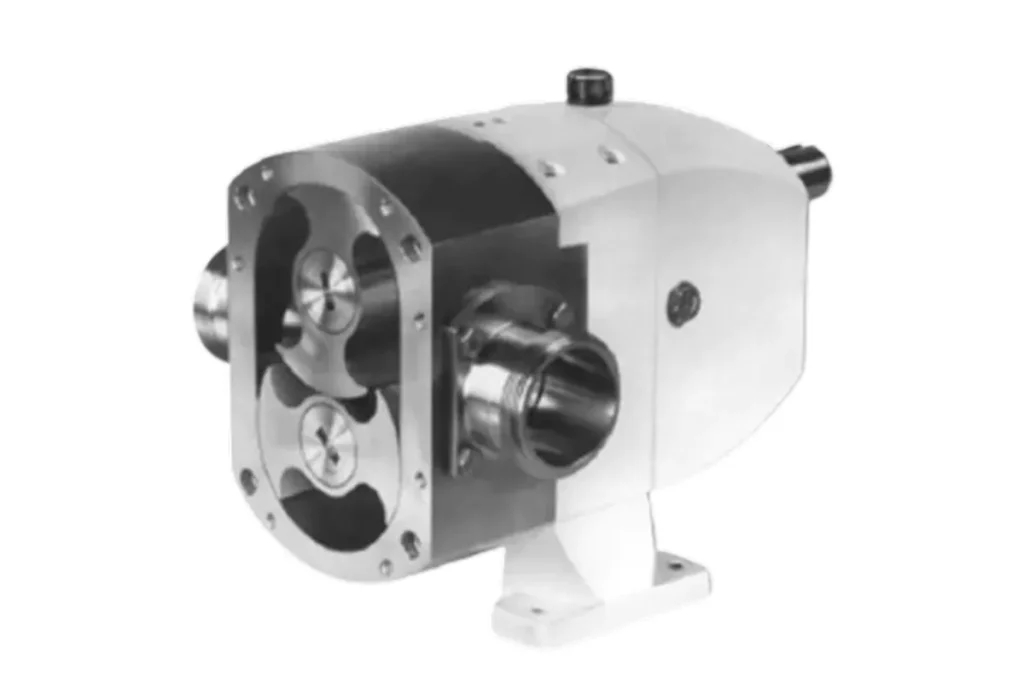
Packo’s HP Series Hy~Line+ rotary lobe pumps are designed for duties involving thin liquids, viscous products and delicate materials. Their low-shear handling and stainless steel product-contact components make them relevant to processes where product quality and cleanability are central considerations.
Understanding the Packo range
HP Series: flexibility for hygienic transfer
The HP Series offers a choice of seals, ports and rotor configurations, helping match the pump to the liquid and installation.
Front-loaded shaft seals and a removable rotor case support servicing. For maintenance teams, that makes access an important part of the selection conversation alongside hydraulic performance.
ZS twin screw pumps: production and cleaning flexibility
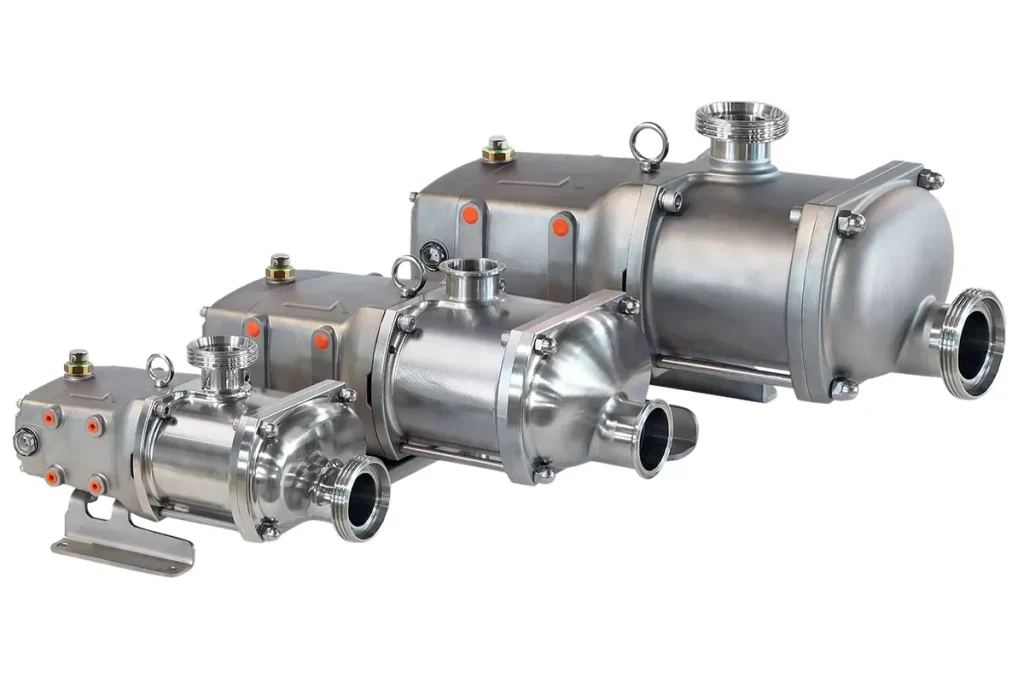
Packo ZS twin screw pumps offer a broad operating speed range, allowing suitable installations to use the same pump for product transfer and clean-in-place duties.
The design also provides front access for seal changes without removing the pump from the system. Suitability still depends on the production duty, cleaning requirements and selected configuration.
Familiar with Jabsco hygienic lobe pumps?
Some customers will recognise the Hy~Line and Ultima names from equipment previously branded Jabsco by Packo.
That hygienic lobe range transitioned to Packo branding in June 2023. If you have an existing installation, provide its nameplate details and serial number when discussing parts, servicing or replacement. This helps identify the correct equipment and configuration.
From planning to replacement
Discover: understand what moves through the line
Start with the product, including its viscosity at operating temperature, any particles and its sensitivity to handling. Establish the required flow, discharge pressure and production schedule.
For an existing system, bring maintenance records and details of recurring problems. These help frame the investigation.
Design: account for the complete operating cycle
Consider suction conditions, pipework, controls, materials and seals alongside the pump itself. Include cleaning temperatures, chemicals and procedures in the specification.
Maintenance access and appropriate pressure protection should also be addressed during system design.
Deliver: establish how good performance looks
Installation and commissioning provide an opportunity to record normal operating conditions. A useful baseline helps the site recognise changes in flow, pressure, noise or leakage later.
Assure: respond to wear and changing duties
A new recipe, different cleaning chemical or increased production requirement can change what the pump needs to do.
Review those changes alongside inspection findings and service history, rather than assuming the original selection remains suitable indefinitely.
Renew: review the process before replacing the pump
When repairs become frequent, consider whether refurbishment or replacement offers better value.
Include downtime, parts requirements and the current production duty in that assessment. A replacement project is also an opportunity to address access or operating issues that have persisted for years.
FAQ
What are Packo hygienic pumps used for?
Packo hygienic pumps support liquid transfer in processing applications, including food and beverage production. The appropriate pump depends on the product, operating conditions and hygiene requirements.
Does All-Pumps supply Packo pumps in Australia?
Yes. All-Pumps lists Packo pumps, product literature and options for parts and maintenance enquiries. View the range here.
Are Packo and Jabsco by Packo connected?
Yes. The former Jabsco by Packo hygienic lobe range moved to Packo branding. Use the model and serial number to identify an existing unit accurately.
Can Packo lobe pumps handle viscous products?
Suitable models can handle viscous liquids. Selection must account for the actual viscosity, temperature, required flow and available inlet conditions.
Can a Packo pump handle liquids containing particles?
Suitable lobe pumps can transfer particle-containing liquids. Confirm particle size, concentration and fragility during selection rather than assuming every model will suit.
Can one pump handle production and CIP?
Packo ZS twin screw pumps can support both duties in suitable installations. Confirm that the selected pump meets the requirements of each operating cycle.
What information helps with Packo pump selection?
Provide the liquid details, viscosity, temperature, flow, pressure, suction arrangement, particle information and cleaning requirements. Include any required compliance documentation.
Should an ageing pump be repaired or replaced?
Compare its condition, repair history and expected remaining life with the current process requirements. Include the cost and consequences of further downtime.
What should a pump maintenance plan cover?
Use the model’s manual to establish inspections, seal checks, lubrication requirements and service intervals. Record operating changes and identify critical spare parts. All-Pumps are available to guide you and assist in preparing a maintenance plan to cover each pump you have.